
We spent a year telling families they did not need another group chat. So adding one deserves an explanation.
Here is what we kept noticing. Every app built to organize a family — the shared calendar, the chore board, the family OS — fails the same quiet way: it works for exactly as long as one person keeps feeding it. There is always a someone, and the day they get tired, it goes stale and everyone drifts back to texting each other questions they have already answered three times. That is not a feature gap. It is a labor model — and you cannot out-feature your way out of it, because the feature is the problem.
So we stopped asking what the better form would be and started asking who does the filing. What if no one had to — what if the record built itself out of the conversation the family was already having?
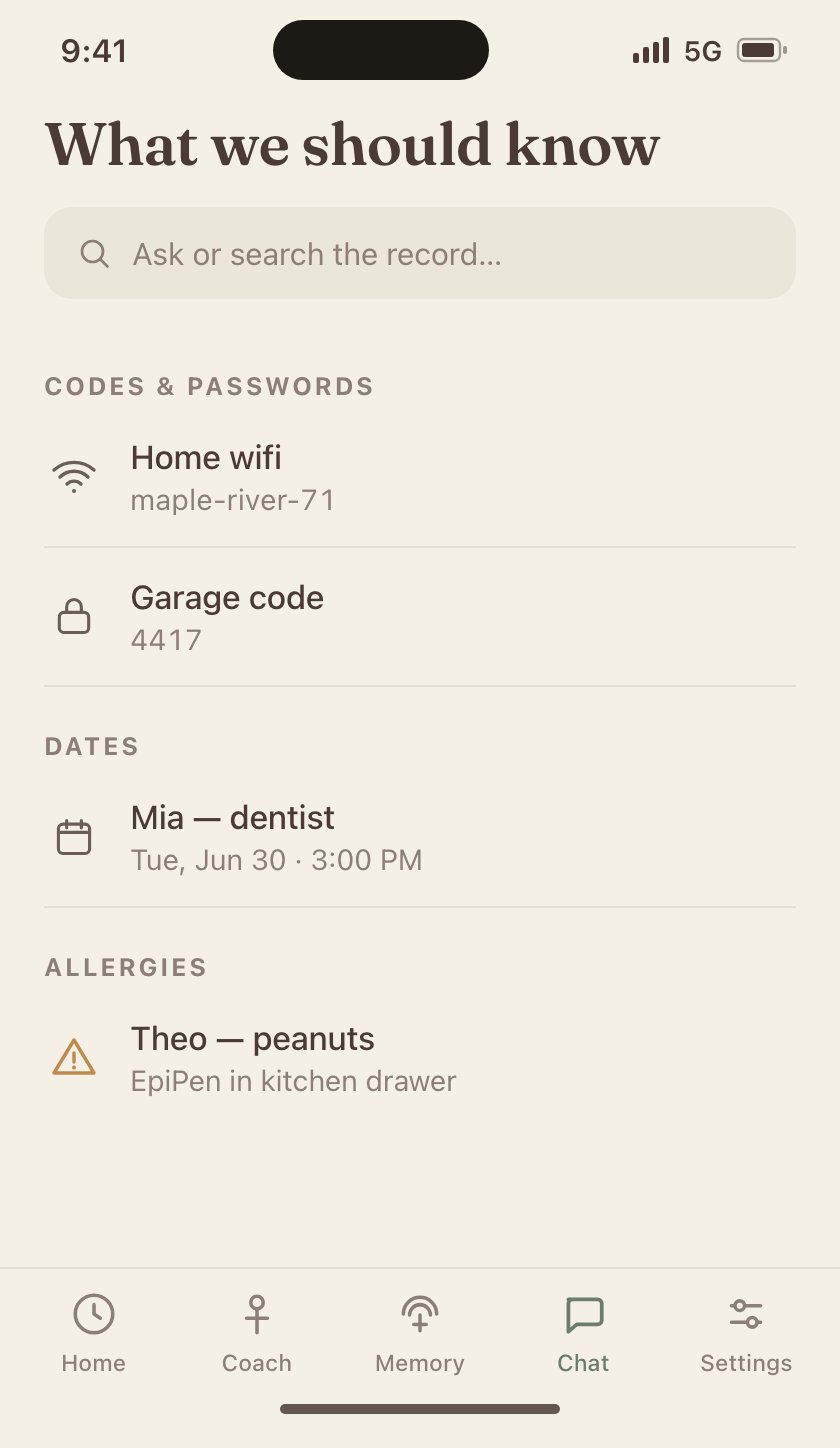
That is Haklo Chat. The family talks the way it always does — the dentist moved to Tuesday, the wifi password changed again, no one can find Theo's library card number. Underneath, a librarian reads along and keeps a tidy record of the things you would hate to forget. Nobody is assigned to enter the data, because the talking is the entering.
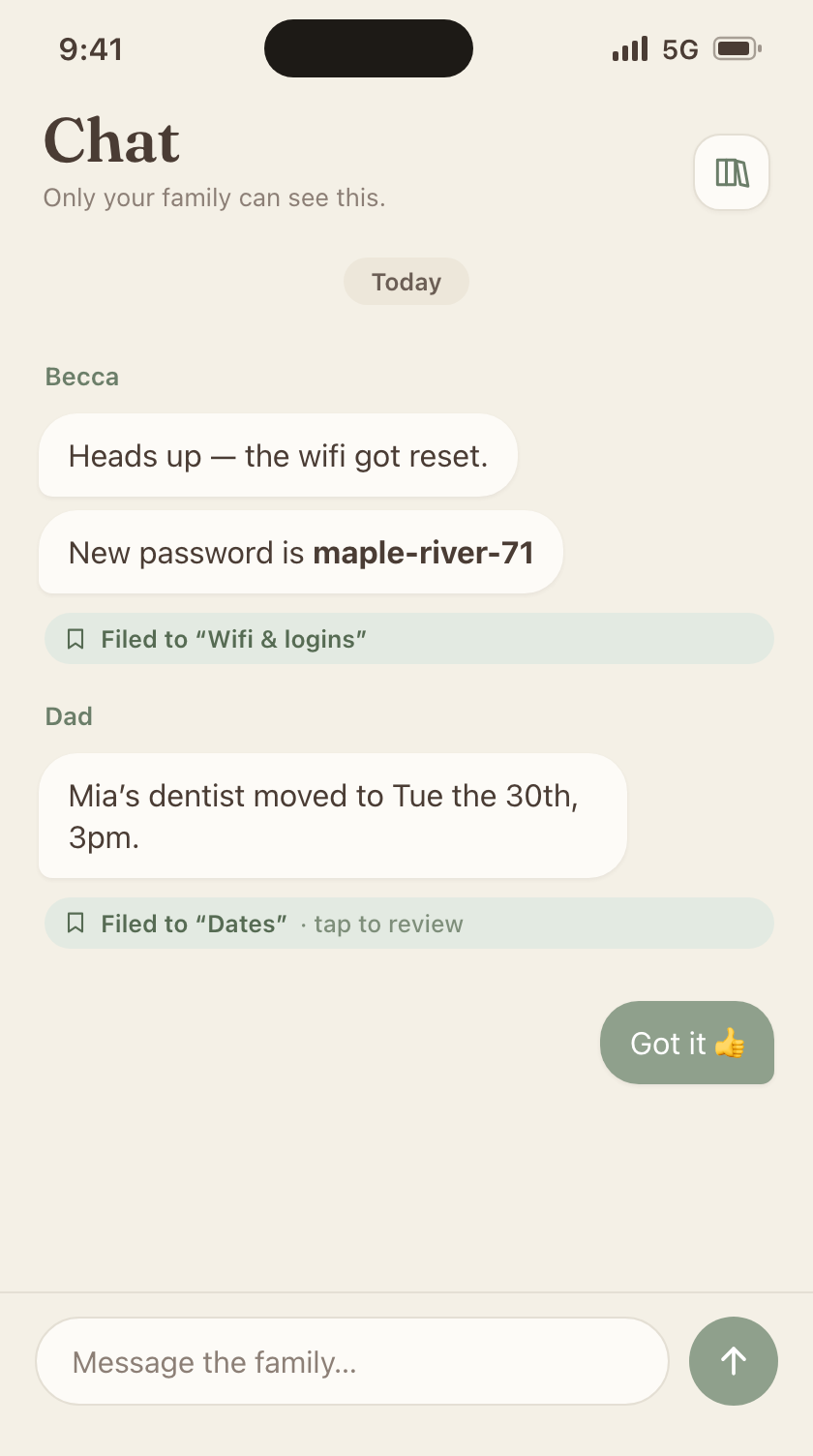
The word librarian is doing real work there. It is a clerk, not a chatbot: it does not join the conversation, take a turn, offer an opinion, or post a single message into the thread. It files, in a separate and quiet surface, and that is all. We have watched what happens when an agent inserts itself into a family's talk — the talk stops being the family's. So this one stays out of it.
Three rules hold the whole thing up, and we did not ship it without them. The agent never posts into the chat. Every fact it files is visible, editable, and deletable, with the message it came from shown right beside it. And retrieval is pull, not push: you ask the record a question and it answers from your own words; it never interrupts, never nudges, never decides on its own that now is the moment to bring something up.
If those rules sound familiar, it is because they are the same promise the rest of Haklo already makes: the family authors its own record. The app does not extract a profile from you in the background and sell the insight back. An intelligent chat is, honestly, the hardest possible place to keep that promise — the agent is being trusted with everything — which is exactly why a company that has refused the extraction model from day one is the right one to build it. The trust is the product. Cozi reading your whole family conversation is alarming. Us doing it should feel consistent with everything we have already told you.
Which means we owe you the uncomfortable sentences too. This chat is not end-to-end encrypted, and its contents are read by an AI provider to do the filing. The genuinely sensitive categories — passwords, financial and medical and custody details — are deliberately held back from automatic filing. You turn the librarian on knowingly, or you leave it off. We would rather say that out loud than bury it.
And we are not trying to replace your group chat or become the place your family lives all day. The chat exists for the six quiet days between gatherings — and it hands things back to the ritual. When three of you mention the grandparents, or a registration is coming due, the librarian can surface it as a candidate for Sunday's conversation. It only ever surfaces. You still author what gets said.
We built this with a small group of families first, because there is exactly one question that matters: does the record the librarian keeps read as useful or as creepy to a real family living a real, noisy week? It is live now — Family Chat free for every family, the librarian as part of Haklo Plus — and that question still governs it. If it is useful, it is the most helpful thing in the house. If it ever tips toward creepy, we would rather hear it and fix it than pretend otherwise. We will keep telling you which way it goes.
— Clay