Everything in Haklo pushes one way. Check in, name a priority, set a goal, pay someone a secret kindness. It's warm by design. And one afternoon, looking at all of it at once, I realized it was tilted: Haklo is very good at helping a family say the easy things, and has almost nothing to help them say the hard ones.
That's not a small gap. A family product that only does encouragement is quietly lying about family. Real families aren't only gratitude and goals — they're also the thing left unsaid at dinner, the resentment calcifying for a month, the apology three years overdue. A tool that can hold only the pleasant half leaves an airbrushed record, and the memoir Haklo builds over time is the whole point. A memoir that remembers only the kindnesses isn't a history. It's a brochure.
We didn't invent the family ritual; we inherited it. And ritual has always been the infrastructure for the heavy things, not just the happy ones — Casper ter Kuile calls it the structure that lets a group carry what no one in it could carry alone. Every tradition that lasted has both a feast and a reckoning. We built the feast and skipped the reckoning.
The research agrees. The most durable finding in relationship science isn't that strong families avoid conflict — it's that they repair it. Gottman's five-to-one ratio quietly assumes there's a one. Conflict isn't the failure state; conflict with no path back is. The families that last aren't the peaceful ones, they're the ones that know how to find their way back after a rupture.
So why haven't I built it? Because it's the most dangerous thing I could build. The same research that says repair matters also says how families actually come apart — not through conflict but through contempt. A feature that just lets people air grievances doesn't become a repair tool. It becomes a complaint box, and a complaint box passed around a dinner table is an accelerant. The whole problem is the difference between two things that look identical from the outside: a tool that enables conflict, and a tool that scaffolds repair. The first is easy and harmful. The second is the only one worth making.
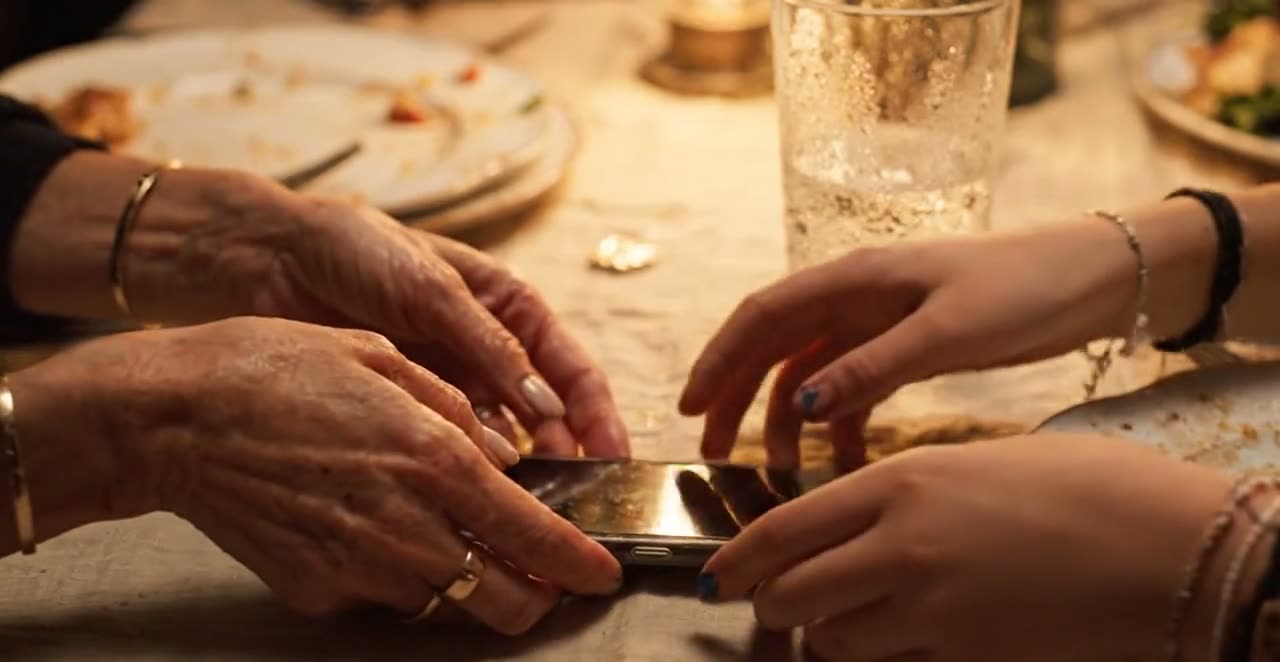
I don't have the finished answer, which is why I'm writing instead of shipping. But I have a shape. The job isn't to make hard conversations easier to start — it's to help the hard thing land as what it usually is underneath: a bid for connection, not an attack. That means restraint. The weekly rhythm, the single device passed hand to hand, words said to a person in a space you've agreed to hold. And the AI stays a guest — it can help you find words you couldn't find alone, but it can't say them for you. The courage is yours. The structure can be ours.
This is the part of Haklo I least want to get wrong, and least want to design alone. So: in your family, how does the hard thing actually get said — or not? What's the conversation you keep meaning to have? And what would a tool have to be before you'd trust it near a moment that fragile?
Tell me where I'm wrong.
— Clay